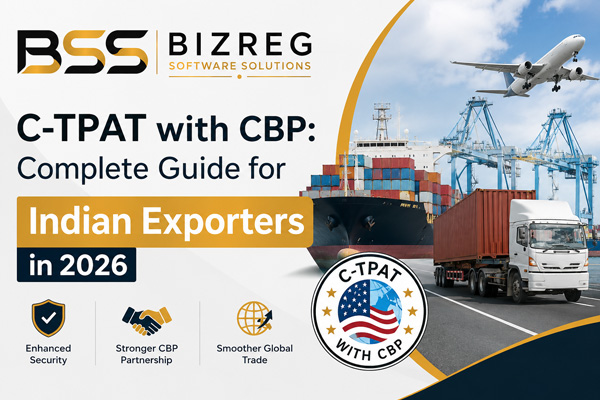
C TPAT with CBP Complete Guide for Indian Exporters in 2026
Introduction
Global trade is evolving rapidly, and supply chain security has become a critical requirement for businesses involved in international commerce. Companies exporting goods to the United States must comply with increasingly stringent security standards to ensure safe and efficient movement of cargo across borders. One of the most important supply chain security initiatives is the Customs-Trade Partnership Against Terrorism (C-TPAT), a voluntary programme administered by US Customs and Border Protection (CBP).
C-TPAT helps businesses strengthen their supply chains against terrorism, smuggling, cargo theft, and other security threats while providing significant trade facilitation benefits. For Indian exporters seeking to expand their presence in the US market, understanding and implementing C-TPAT requirements can provide a substantial competitive advantage. This guide explains everything businesses need to know about C-TPAT in 2026.
What Is C-TPAT?
C-TPAT, or Customs-Trade Partnership Against Terrorism, was established by US Customs and Border Protection in November 2001 following the September 11 attacks. The programme encourages collaboration between government agencies and private-sector businesses to improve supply chain security. Under the programme, participating companies voluntarily implement specific security measures throughout their supply chains.
In return, CBP offers various benefits, including reduced inspections, faster cargo processing, and improved trade efficiency. Today, C-TPAT is one of the world's most respected supply chain security programmes, with more than 11,000 certified partners accounting for over half of the value of goods imported into the United States annually.
Why Is C-TPAT Important?
International supply chains face numerous risks, including:
- Terrorism-related threats
- Cargo theft
- Smuggling activities
- Counterfeit products
- Cybersecurity attacks
- Human trafficking
- Trade compliance violations
C-TPAT helps businesses identify vulnerabilities and establish robust security controls to mitigate these risks.
For exporters, certification demonstrates a commitment to supply chain integrity and compliance, making them more attractive to US importers and multinational corporations.
Who Can Apply for C-TPAT Certification?
The programme is open to various entities involved in international trade, including:
US Importers
Importers are the largest category of C-TPAT members and often require their suppliers to maintain equivalent security standards.
Foreign Manufacturers
Manufacturers outside the United States, including Indian exporters, can apply if they supply goods to the US market.
Freight Forwarders
Companies managing international transportation and logistics can participate in the programme.
Customs Brokers
Licensed customs brokers involved in international trade transactions are eligible.
Carriers
Air, sea, and land transportation providers operating shipments into the United States can become certified.
Third-Party Logistics Providers (3PLs)
Warehousing and logistics service providers frequently pursue certification to strengthen client confidence.
Understanding the C-TPAT Minimum Security Criteria
To become certified, businesses must implement CBP's Minimum Security Criteria (MSC). These requirements cover ten essential security domains.
1. Cybersecurity
Companies must establish cybersecurity controls to protect systems and data from unauthorized access and cyber threats.
Requirements include:
- Multi-factor authentication
- Password management
- Patch management
- Network monitoring
- Incident response planning
2. Conveyance and Instrument of International Traffic Security
Businesses must inspect containers, trailers, and transportation equipment for signs of tampering or concealed contraband.
3. Seal Security
High-security seals compliant with ISO 17712 standards must be used and carefully monitored.
Organizations must maintain records of:
- Seal numbers
- Seal application procedures
- Inspection activities
- Incident investigations
4. Physical Access Controls
Facilities should implement controls to prevent unauthorized access.
Examples include:
- Employee identification cards
- Visitor management systems
- Security checkpoints
- CCTV surveillance
- Restricted access zones
5. Personnel Security
Businesses must verify employee backgrounds and maintain procedures for managing workforce security.
This includes:
- Pre-employment screening
- Contractor verification
- Employee termination controls
- Periodic reviews
6. Procedural Security
Organizations must establish documented procedures covering:
- Cargo handling
- Loading operations
- Shipping processes
- Documentation accuracy
- Chain-of-custody controls
7. Agricultural Security
Exporters dealing with food, agricultural products, and related goods must implement measures to prevent contamination and pest introduction.
8. Physical Security
Facilities should maintain secure infrastructure through:
- Perimeter fencing
- Secure locks
- Adequate lighting
- Intrusion detection systems
- Routine inspections
9. Trade Compliance
Businesses must ensure adherence to all import and export regulations while maintaining accurate documentation.
10. Security Awareness and Training
Employees should receive regular training on security threats, reporting procedures, and compliance responsibilities.
The C-TPAT Certification Process
The certification journey generally involves five stages.
Step 1: Online Application
Applicants submit information through the CBP portal, including:
- Company profile
- Supply chain overview
- Security profile
- Operational details
Step 2: CBP Review
Supply Chain Security Specialists review the application and may request additional information.
Step 3: Conditional Approval
Upon successful review, companies receive conditional certification status and can begin accessing certain programme benefits.
Step 4: Validation
CBP conducts an on-site or virtual validation to verify implementation of security measures.
The validation assesses whether the organization is following the procedures described in its security profile.
Step 5: Ongoing Compliance
Certified partners must:
- Update security profiles annually
- Report significant operational changes
- Participate in periodic revalidations
- Maintain continuous compliance
Major Benefits of C-TPAT Certification
Reduced Customs Inspections
Certified companies experience fewer cargo inspections, reducing delays and operational costs.
Faster Cargo Processing
Shipments receive priority treatment, resulting in quicker movement through US ports.
Improved Business Reputation
Certification demonstrates a strong commitment to supply chain security and compliance.
Better Customer Relationships
Many US importers prefer working with certified suppliers because of the reduced risk profile.
Lower Supply Chain Costs
Faster clearance reduces expenses associated with storage, demurrage, and delays.
Access to CBP Support
Partners receive direct communication channels with CBP specialists for guidance and issue resolution.
International Recognition
C-TPAT aligns with several international trusted trader programmes through Mutual Recognition Agreements.
C-TPAT and India's AEO Programme
India's Authorised Economic Operator (AEO) programme, administered by the Central Board of Indirect Taxes and Customs (CBIC), shares many objectives with C-TPAT.
Businesses that already hold AEO certification often find it easier to align with C-TPAT requirements because many security controls overlap.
This alignment helps Indian exporters reduce compliance burdens while improving international trade efficiency.
Why C-TPAT Matters for Indian Exporters in 2026
The United States remains one of India's largest export destinations. As supply chain transparency and security expectations continue to increase, American buyers are placing greater emphasis on supplier compliance.
Industries particularly affected include:
- Pharmaceuticals
- Textiles and apparel
- Engineering goods
- Electronics
- Food processing
- Automotive components
- Chemicals
Many US importers now expect overseas suppliers to demonstrate compliance with internationally recognized security programmes.
Businesses that proactively adopt C-TPAT-aligned practices are often better positioned to:
- Win new contracts
- Retain key customers
- Reduce customs delays
- Strengthen supply chain resilience
- Expand into new international markets
How Bizreg Software Solutions Can Help
Preparing for C-TPAT certification requires detailed planning, documentation, risk assessments, and process implementation.
Bizreg Software Solutions assists exporters, manufacturers, logistics providers, and trade intermediaries by:
- Conducting security gap assessments
- Reviewing existing compliance systems
- Developing security documentation
- Preparing CBP application materials
- Supporting validation readiness
- Providing ongoing compliance guidance
With expertise in both Indian regulatory requirements and international trade compliance frameworks, Bizreg Software Solutions helps businesses build secure, efficient, and globally competitive supply chains.
Conclusion
C-TPAT has become one of the most influential supply chain security programmes in global trade. It enables businesses to strengthen security, improve operational efficiency, and gain a competitive advantage in the US market.
For Indian exporters, achieving C-TPAT compliance is no longer simply an optional enhancement—it is increasingly becoming a strategic requirement for long-term success. By investing in supply chain security today, businesses can reduce risks, accelerate customs clearance, and build stronger relationships with international customers.
As global trade continues to evolve, organizations that embrace trusted trader programmes such as C-TPAT will be better equipped to navigate compliance challenges and capitalize on new growth opportunities.
FAQs
- What is C-TPAT?
C-TPAT (Customs-Trade Partnership Against Terrorism) is a voluntary supply chain security program administered by US Customs and Border Protection (CBP) to improve international trade security. - Who can apply for C-TPAT certification?
US importers, foreign manufacturers, freight forwarders, customs brokers, logistics providers, and carriers involved in international trade can apply for C-TPAT certification. - Why is C-TPAT important for Indian exporters?
C-TPAT helps Indian exporters improve supply chain security, gain customer trust, reduce shipment delays, and strengthen relationships with US importers. - What are the main C-TPAT security requirements?
Requirements include cybersecurity, container security, seal security, physical security, personnel security, procedural security, trade compliance, and employee training. - What are the benefits of C-TPAT certification?
Benefits include fewer customs inspections, faster cargo clearance, lower supply chain costs, improved reputation, and enhanced business opportunities. - How long does the C-TPAT certification process take?
The process varies depending on the organization and CBP review timelines, but it typically includes application review, conditional approval, validation, and ongoing compliance.
Recent Posts
Our Brand